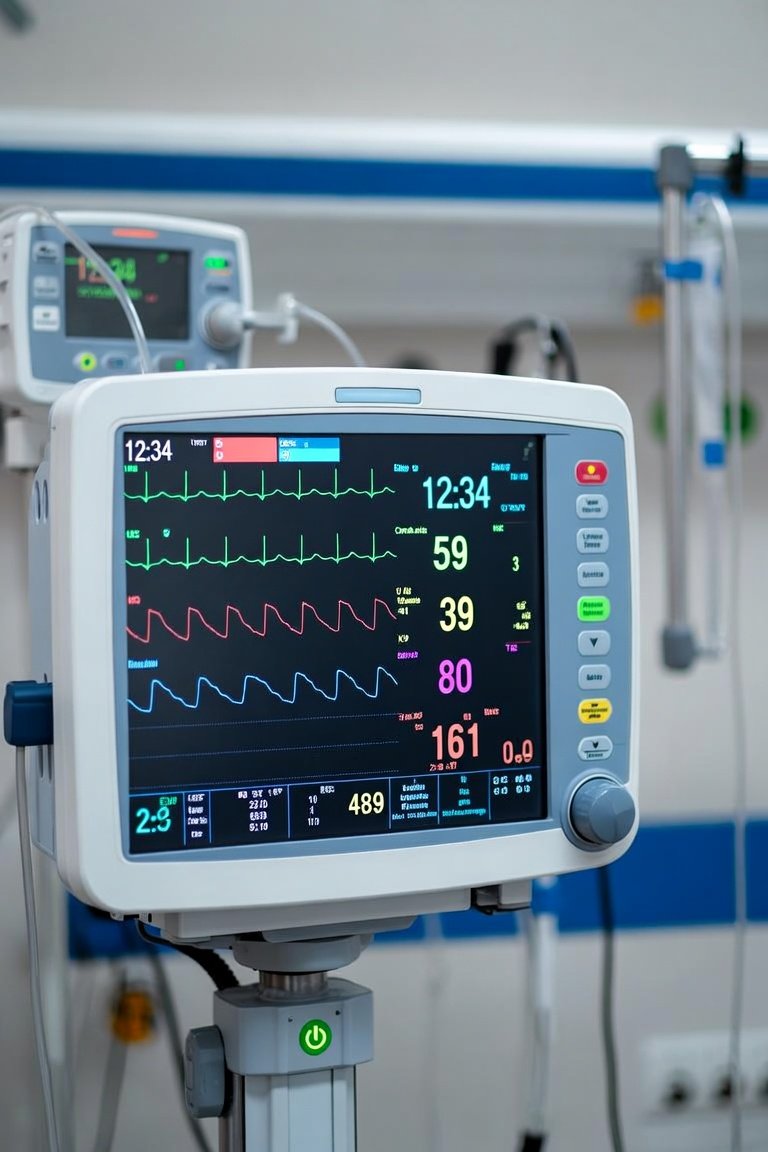
Walk into any modern hospital ward and you will see fewer cables snaking from beds to wall-mounted units. Wireless vital sign monitors have moved from novelty to near-necessity in many clinical settings. These systems continuously track heart rate, respiratory rate, blood oxygen saturation, blood pressure, and temperature, transmitting data to a central nursing station or a smartphone app. The promise is simple: untether the patient while keeping a continuous safety net. But as with any technology, the clinical reality involves trade-offs that demand careful evaluation.
THE CLEAR BENEFITS
The most obvious advantage is patient mobility. A postoperative patient wearing a small chest patch or a wrist-based monitor can walk to the bathroom, sit in a chair, or even take a short stroll down the hallway without losing surveillance. This early mobilization reduces the risk of deep vein thrombosis, pulmonary complications, and hospital-acquired weakness. For the nursing staff, the benefit is equally tangible. Instead of manual spot checks every four hours, continuous data streams alert them to deterioration in real time. Studies have shown that early warning scores derived from wireless monitoring can catch subtle changes in vital signs hours before a code blue event. The reduction in alarm fatigue is also notable when systems use intelligent algorithms to filter out motion artifacts and false positives. Finally, wireless monitors ease the burden of patient transfer. A patient arriving from the emergency department can remain on the same monitoring device, preserving continuity of data without reconnecting leads.
THE REAL DRAWBACKS
No system is without compromises. The most significant concern is signal reliability. Wireless monitors depend on robust Wi-Fi or Bluetooth infrastructure. In a busy hospital with thick walls, metal fixtures, or overlapping networks, dropouts can occur. A lost signal for even five minutes during a critical event is unacceptable. Battery life is another limitation. Most wireless patches last 48 to 72 hours, but high-acuity patients may require longer monitoring. Recharging or replacing patches mid-stay interrupts data collection and adds to supply costs. Accuracy also varies by device and patient condition. Motion artifacts from shivering, tremors, or simple walking can corrupt readings, especially for SpO2 and respiratory rate. For patients with poor peripheral perfusion, wrist-based monitors often fail to obtain a reliable signal, whereas a traditional finger probe with a cable might still work. There is also the issue of cost. The initial investment for a fleet of wireless monitors, the gateway infrastructure, and the software integration with the electronic health record is substantial. Disposable patches for single-patient use add a recurring expense that many departments underestimate.
WHAT TO LOOK FOR WHEN SELECTING
When evaluating wireless vital sign monitors, do not simply compare spec sheets. First, consider the patient population. A general medical-surgical floor has different needs than a step-down unit. For lower acuity, a patch that measures heart rate, respiratory rate, and temperature may suffice. For higher acuity, you need a device that also captures blood pressure and SpO2, which often requires a hybrid system with a small cuff and finger sensor. Second, examine the alarm management software. The best systems allow you to set personalized thresholds and delay times, and they integrate with your existing nurse call system. Third, test the device in your actual environment. Walk the hallways, place it near metal doors, and run it for 72 hours to see how often it drops signal. Fourth, check the data integration. The monitor must push data directly into your EHR, not require manual transcription. Finally, ask about the battery replacement protocol and the cost per patient day. Some vendors offer a subscription model that includes patches, which can simplify budgeting.
The decision to adopt wireless monitoring is not about replacing all cabled monitors. It is about adding a layer of flexibility for appropriate patients. In my experience, a hybrid approach works best. Keep traditional wired monitors for the ICU and use wireless devices for step-down and general wards. Start with a pilot on one unit, gather real-world data on alarm rates and signal reliability, and then scale up. The technology is mature enough to improve outcomes, but only if you match the device to the patient and the environment. Choose wisely, and you will give your patients freedom and your staff peace of mind.
Medical Devices
The Wireless Shift in Patient Monitoring