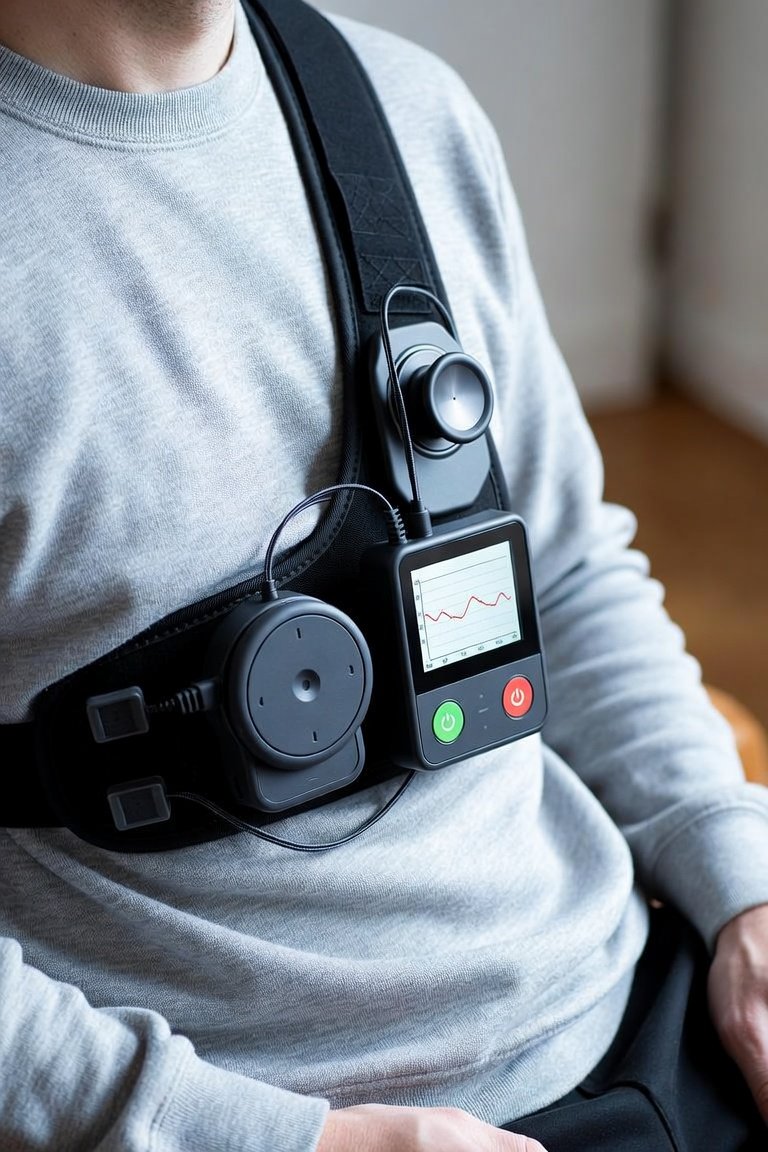
For decades, the vital signs of a patient were the exclusive domain of the hospital room, captured by bulky monitors wired to the wall. That era is closing. The wearable health technology now available for home use is not a futuristic concept; it is a practical, powerful tool that is reshaping how we manage chronic conditions, track post-operative recovery, and even catch early warning signs of trouble. As someone who has spent two decades calibrating and deploying clinical equipment, I can tell you the gap between hospital-grade accuracy and consumer wearables is narrowing faster than most people realize. We are moving from reactive medicine to proactive, daily data collection, and the patient is now the primary operator.
The core value of these devices lies in their ability to provide continuous, longitudinal data that a single clinic visit simply cannot capture. Consider the standard blood pressure cuff. At home, you might get one reading a day. A wearable, like a smartwatch with an oscillometric cuff built into the band, can take readings every 15 minutes during sleep and activity. This gives us a circadian profile of blood pressure, revealing nocturnal hypertension or morning surges that are far more predictive of cardiovascular events than a single daytime reading. For patients with atrial fibrillation, the photoplethysmography (PPG) sensors on modern watches use green and infrared light to detect irregular pulse waves. The clinical validation studies are impressive, with sensitivity rates above 95% for detecting AFib episodes. This is not a gimmick; it is a screening tool that prompts earlier intervention.
When you start comparing options, the landscape can be overwhelming, but it breaks down into three practical categories. First, the multipurpose smartwatch. These are ideal for general wellness and arrhythmia screening. They offer ECG, SpO2, and heart rate variability, but their blood pressure monitoring is often less accurate than a dedicated upper-arm cuff. Second, the dedicated medical-grade patch or ring. These are designed for continuous, clinical-grade monitoring of heart rate, respiratory rate, and skin temperature. They are often prescribed for post-surgical monitoring to detect early signs of infection or decompensation. They lack a screen, but they are more comfortable for 24/7 wear and have battery life measured in days, not hours. Third, the single-function devices, like a Bluetooth-enabled pulse oximeter or a connected glucometer. These are the workhorses for specific conditions, and their accuracy is typically excellent because they are used in a controlled manner, such as on a fingertip rather than a wrist.
What should you look for when selecting a device for a patient or a family member? The single most important factor is not the number of features, but the quality of the data and the ease of data transmission. Look for devices that have received FDA clearance or CE marking for the specific claim you are using them for, not just for general fitness. A watch that says "not for medical use" is not a substitute for a validated monitor. Verify that the device has a companion application that integrates with your electronic health record or a secure cloud portal that your clinician can access. The real power is not in the reading itself, but in the trend analysis. A 2% drop in oxygen saturation over three days is far more meaningful than a single 94% reading.
My closing recommendation is simple: start with a clear clinical question. Do you need to track blood pressure variability? Then invest in a validated smartwatch with a cuff. Do you need to monitor a post-operative patient for silent hypoxia? Then a continuous pulse oximetry ring with an alerting system is your best choice. The technology is mature, the data is actionable, and the patient is ready. The home is no longer a waiting room; it is the first line of defense in modern medicine. Embrace it, but do so with the same rigor you would apply to any diagnostic tool.
Innovations & Tech
The Quiet Revolution in Your Living Room: Wearable Health Tech for Home Monitoring