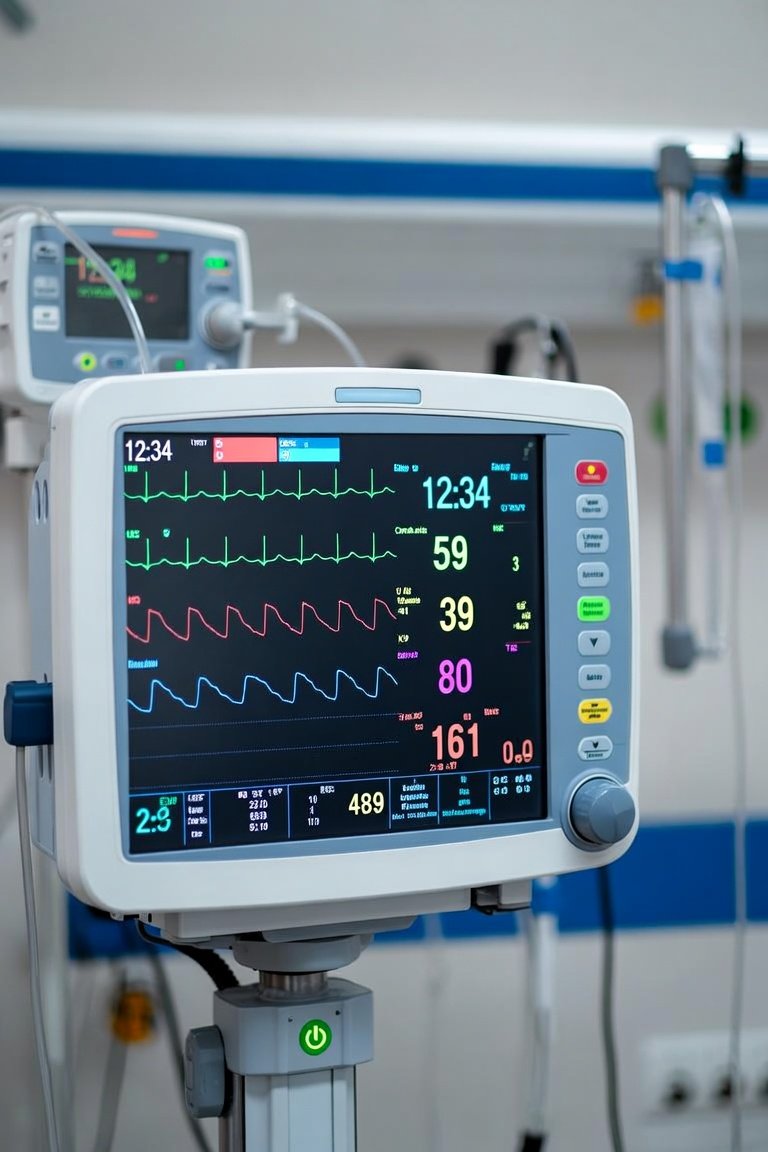
Walk into any modern hospital ward and you will see a fundamental shift happening at the bedside. The spaghetti bowl of cables that once tethered patients to a wall-mounted monitor is slowly disappearing, replaced by sleek, wearable transmitters. As a biomedical specialist who has spent two decades installing and maintaining these systems, I have watched this technology mature from a novelty into a serious clinical tool. But the decision to adopt wireless vital sign monitoring is not simply about cutting cords. It requires a clear-eyed assessment of what these devices offer and where they still fall short.
The primary advantage of wireless monitors is undeniable: continuous ambulation. For post-operative patients, early mobility is critical to preventing deep vein thrombosis and pulmonary complications. A patient wearing a small chest patch or a wrist-based sensor can walk the hallway while their heart rate, respiratory rate, and oxygen saturation stream live to the central nursing station. This freedom also reduces fall risk, as patients no longer need to untangle themselves to use the restroom. Furthermore, these systems reduce alarm fatigue. Modern wireless devices use sophisticated algorithms to filter motion artifacts, meaning the nursing staff receives fewer false alarms than with traditional hardwired units. The data is also continuous, providing a trend line that catches subtle deteriorations hours before a manual spot-check would.
However, the professional must weigh these benefits against significant drawbacks. The most critical issue is signal reliability. A wireless monitor is only as good as its radio frequency environment. In a busy hospital, Wi-Fi congestion, metal equipment, and even thick concrete walls can cause dropouts. I have seen a telemetry unit lose connectivity for thirty seconds during a critical arrhythmia, a gap that is simply unacceptable. Battery life is another practical concern. While most patches last 48 to 72 hours, a sudden battery failure at 3 AM requires a nurse to interrupt the patient for a replacement, which defeats the purpose of unobtrusive monitoring. Finally, there is the cost. The initial investment for a fleet of wireless sensors is high, and unlike a $5,000 bedside monitor that lasts a decade, these disposable or semi-disposable sensors represent a recurring operational expense that many budget committees underestimate.
When comparing specific systems, you generally face three categories. First, the adhesive chest patch, such as the Philips Biosensor or VitalConnect, which is ideal for general ward patients and offers excellent ECG waveform fidelity. Second, the wearable armband or wrist oximeter, which is more comfortable but often less accurate for heart rate during motion. Third, the implantable or ingestible sensor, which is reserved for niche applications like core temperature monitoring. My advice is to avoid mixing vendors if possible. A unified platform where the sensor, the gateway, and the software are from the same manufacturer will save your IT department countless hours of middleware troubleshooting.
When you are evaluating a system for purchase, focus on three specific technical parameters. First, check the data sampling rate. A monitor that samples every 5 seconds is vastly superior to one that averages over 60 seconds, as it catches rapid changes. Second, verify the alarm escalation protocol. The best systems automatically escalate an unacknowledged alarm to a charge nurse’s smartphone. Third, look at the interoperability. The system must push data into your existing Electronic Health Record (EHR) using HL7 or FHIR standards, otherwise your clinicians will be charting manually, negating the efficiency gain.
In closing, wireless vital sign monitors are not a replacement for hardwired monitoring in critical care units where millisecond accuracy is paramount. But for the progressive care and general medical-surgical floors, they are a transformative tool that improves patient dignity and safety. Choose a system with a proven track record for signal stability, budget for the consumables, and train your staff on the nuances of artifact rejection. Done right, this technology will not just untether your patients; it will unburden your nursing staff.
Medical Devices
The Untethered Patient: A Practical Look at Wireless Vital Sign Monitors